What Is GC Patrol Shield Graphene Composite Material, Explained

Not Kevlar. Not ceramic. Not a viewport, a built-in light, or a broad rating range. Here’s what GC Patrol Shield actually is.

For Law Enforcement | Chiefs & Command Staff | Procurement Officers
TL;DR:

  • GC Patrol Shield is built from graphene aerogel composite layers combined with layers of ultra-high molecular weight polyethylene (UHMWPE), in a cut-proof fabric sleeve casing, not a conventional Kevlar or ceramic panel.
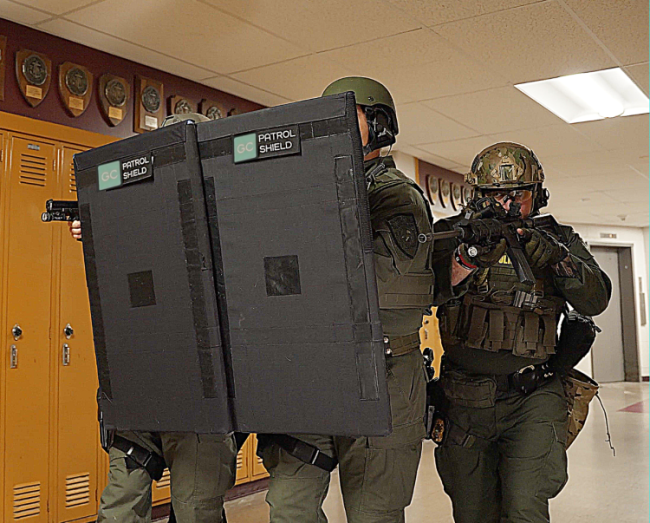
  • It has no transparent viewport: a uniform structural profile across the full strike face, with situational awareness maintained through body-worn or shield-mounted cameras and tactical positioning.
  • It has no built-in or integrated light. An external light (such as a FoxFury Shield Light Solution) connects as a separate accessory.
  • It carries NIJ rating, Level III+
  • It is ASTM E3347-25 verified at both RF1 (rifle) and SG (shotgun) levels: the only shield verified at both.

1. What GC Patrol Shield Is Made Of, and Why It's Built That Way

GC Patrol Shield’s construction is graphene aerogel composite layers combined with layers of ultra-high molecular weight polyethylene (UHMWPE), encased in a cut-proof fabric sleeve. The graphene aerogel composite sits at the core of the panel; UHMWPE layers surround it, with the fabric sleeve casing as the outer layer. This is a layered composite system, not a single-material panel and not a simple swap of one conventional material for another.

The construction is built for what the shield needs to do as a complete system: absorb and disperse impact energy across the panel rather than concentrating it at the point of a strike, hold structural integrity across edge shots and multi-shot impacts, and do it all at roughly half the weight of comparable rifle-rated shields. The layering, the material selection, and the absence of interrupting features all trace back to that same goal.

What to know: GC Patrol Shield’s construction is a layered graphene aerogel composite and UHMWPE system, engineered as a complete structural unit, not a single-material substitution and not a stripped-down version of a conventional shield.

2. Myth: it's a conventional Kevlar or ceramic panel. Fact: graphene aerogel composite is what sets it's construction apart.

GC Patrol Shield is not a conventional Kevlar or ceramic ballistic panel. Its construction combines graphene aerogel composite layers with layers of UHMWPE: the graphene aerogel composite is the material that distinguishes it, not a replacement of every conventional ballistic material with something entirely novel.

That distinction matters for how the shield performs. Graphene aerogel composite brings exceptional strength and energy-dissipation properties at a fraction of the weight conventional ballistic panels require. Combined with UHMWPE’s own established ballistic performance, the composite construction is what allows GC Patrol Shield to hit NIJ Level III+ protection at half the weight, without dropping the multi-shot, edge-shot, and structural performance the shield is verified for.

What to know: The graphene aerogel composite is the material that sets GC Patrol Shield apart: layered with UHMWPE, not standing in isolation, and not a marketing label over a conventional panel.

3. Myth: it has a viewport. Fact: no transparent viewport, by design.

GC Patrol Shield has no transparent viewport. The strike face is uniform graphene composite across its full profile, with no glazing-to-body interface to account for.

A viewport requires cutting an opening into the strike face and filling it with polycarbonate glazing: a joint between two different materials that behaves differently from the rest of the panel under impact. Removing it entirely produces a single continuous structural profile: no opening geometry for an edge shot to find, no secondary material with different ballistic properties to manage.

Situational awareness is maintained through body-worn and shield-mounted cameras or tactical positioning, allowing officers to observe and respond without placing their line of sight behind a panel that introduces its own structural considerations.

What to know: The absence of a viewport is a deliberate decision, not a missing feature. GC Patrol Shield’s situational awareness approach doesn’t depend on a glazed opening in the strike face.

4. Myth: it has integrated LED lighting. Fact: no built-in light; an external light connects as an accessory.

GC Patrol Shield has no built-in or integrated light source. An external light (such as a FoxFury Shield Light Solution) connects to the shield as a separate accessory, not a factory-integrated component.

This follows the same logic as the no-viewport design: a built-in light means another opening or mounting interruption in the strike face, another point where the panel’s continuity has to accommodate a non-ballistic component. Keeping lighting external and modular means the strike face stays uniform, and agencies can select or upgrade lighting hardware independently of the shield itself.

What to know: Lighting on GC Patrol Shield is an accessory choice, not a built-in feature, consistent with the shield’s broader approach of keeping the strike face free of non-structural interruptions.

5. What it's verified for: ASTM E3347-25 at both RF1 and SG

Beyond its NIJ Level III+ rating, GC Patrol Shield is ASTM E3347-25 verified, the first rifle shield to pass this real-world ballistic shield standard. It is verified at both RF1 (rifle) and SG (shotgun) threat levels, the only shield verified at both.

ASTM E3347-25 tests the complete shield as a system: extreme temperature conditioning, water immersion, multi-shot testing (three rounds within a 4-inch circle), edge shots, weak point testing, and angled shots. Verification was conducted by an independent, ISO-qualified third-party laboratory (the same lab qualified by NIJ) and subsequently by the Safety Equipment Institute (SEI). The shield tested is the same commercial product sold since early 2024, with no modifications made for testing.

What to know: GC Patrol Shield’s verification record extends beyond its NIJ rating to independent ASTM E3347-25 verification at both rifle and shotgun threat levels, a record most rifle-rated shields on the market don’t share.

6. How to use this in practice

For LE audiences researching the brand for the first time:

  • Start from what GC Patrol Shield is (graphene aerogel composite and UHMWPE construction, no viewport, no built-in light, NIJ Level III+ rated) rather than assumptions carried over from conventional shield designs.
  • The GC Patrol Shield design-explained page covers the fuller engineering rationale behind these choices.

For chiefs and command staff evaluating the product:

  • Treat the NIJ Level III+ rating and ASTM E3347-25 verification as two distinct, complementary facts, not the same claim stated twice. The ASTM verification page covers what the verification record includes in full.

For procurement officers building a comparison record:

  • Document the specific construction, rating, and verification facts in the procurement file rather than relying on general assumptions about what a rifle-rated shield typically includes.

GC Patrol Shield: What It Is


Assumption What GC Patrol Shield Is
Conventional Kevlar/ceramic panel Graphene aerogel composite layers combined with UHMWPE layers, cut-proof fabric sleeve casing
Has a viewport No transparent viewport: uniform strike face, no glazing-to-body interface
Has integrated lighting No built-in light: external light (e.g. FoxFury) connects as an accessory
NIJ Rating NIJ Level III+ rated
Verification ASTM E3347-25 verified at both RF1 (rifle) and SG (shotgun): only shield verified at both
Lab ndependent ISO/IEC 17025 lab also qualified by NIJ; SEI-verified
Warranty 10 years, double the industry standard
Product status Same commercial product sold since early 2024, no modifications for testing

Key Takeaways

  • GC Patrol Shield’s construction is graphene aerogel composite layers combined with UHMWPE layers in a cut-proof fabric sleeve casing, not a conventional Kevlar or ceramic panel.
  • It has no transparent viewport and no built-in light, both deliberate structural decisions, with situational awareness handled by cameras and positioning, and lighting available as an external accessory.
  • It carries NIJ rating, Level III+.
  • It is ASTM E3347-25 verified at both RF1 (rifle) and SG (shotgun): the only shield verified at both threat levels, and the first rifle shield to pass this standard.
  • Verification was independent: an ISO/IEC 17025 laboratory also qualified by NIJ, and the Safety Equipment Institute (SEI), on the same commercial product sold since early 2024.

GC Patrol Shield is built from graphene aerogel composite and UHMWPE layers, NIJ Level III+ rated, and ASTM E3347-25 verified at both RF1 and SG, the most complete testing record available for a ballistic shield. Speak to the GC team or download the brochure to find out more.