
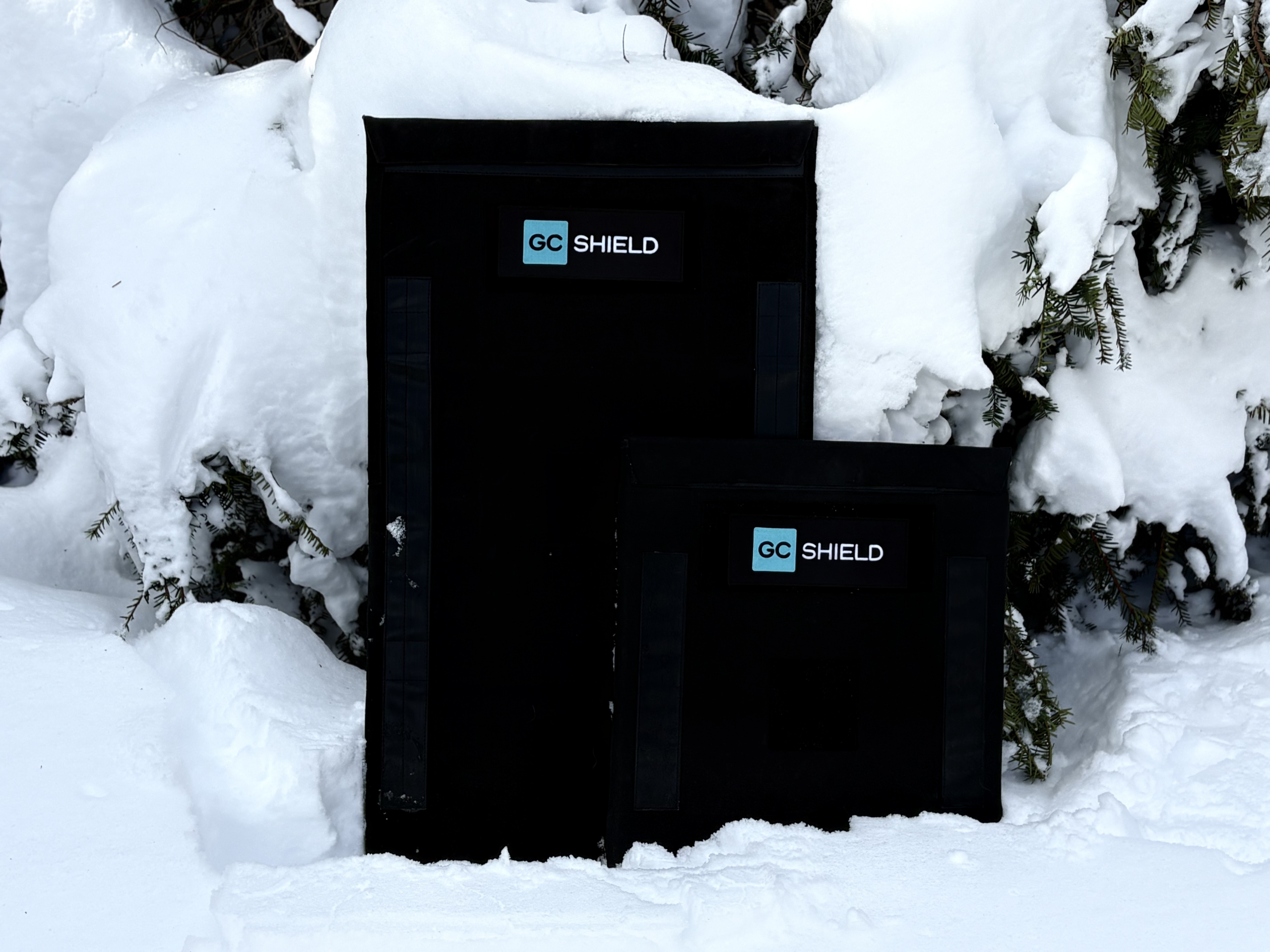
Why Your Ballistic Shield Needs to Work in a Blizzard (And a Heat Wave)
ASTM Series Part 1: Extreme Weather Testing
Last week, officers across the Northeast responded to emergencies in blizzards, sub-zero temperatures and whiteout conditions. Meanwhile, other officers face the opposite extreme: 100°F+ heat, patrol vehicles baking in the sun, and equipment stored in sweltering conditions. Your ballistic shield needs to work in both scenarios. But does it?
NIJ Testing: A Strong Foundation
The NIJ Standard 0108.01 test for ballistic materials has long been the de facto benchmark for ballistic shield testing, establishing a baseline performance standard for law enforcement nationwide. Under the NIJ standard, a shield must survive five widely spaced shots of a given threat at ambient temperature without perforation.
However, real-world operations don’t always happen at ambient temperatures. In fact, temperature extremes are the norm, where ballistic shields are stored in police vehicles, exposed to high and low temperatures that can affect material integrity, flexibility, and ballistic performance in ways the NIJ standard testing doesn’t capture. That’s why ASTM E3347-25, the Standard Specification for Ballistic-Resistant Shields Used by Law Enforcement Officers, takes shield testing to the next level: the real world.
What ASTM E3347-25 Does Differently
The ASTM E3347-25 standard mandates the use of environmental conditioning, requiring shields to undergo water immersion, temperature shock, and extreme temperature conditioning before any ballistic testing occurs:
- Temperature Shock: Shields are exposed to a temperature swing from -25°F to 120°F, spending at least two hours at each temperature and transferring between the two in under a minute.
- Water Submersion: Shields are completely submerged in water for at least 30 minutes.
- Extreme High/Low Temperature: Shields are exposed to -60°F or 155°F for at least six hours.
After conditioning, shields are held at -20°F or 140°F and only removed for 30-minute intervals for ballistic testing. Ensuring every shot is fired on a thermally stressed shield. The result: ballistic testing that mirrors how shields actually get used. All this testing must be performed by ISO-qualified laboratories, and the results may only be verified by ASTM’s affiliate, Safety Equipment Institute (SEI).
Why Extreme Temperature Matters for Ballistic Materials
The material science here is well established. UHMWPE (ultra-high molecular weight polyethylene, the fibre used in most rifle-rated ballistic shields) is documented in peer-reviewed research to lose ballistic integrity under temperature stress. At elevated temperatures, UHMWPE fibres soften and lose structural integrity, with ballistic performance declining measurably above 176°F and degrading further as temperatures rise. At the cold extreme, prolonged exposure causes fibres to become rigid and brittle, increasing the risk of penetration on impact.
These aren’t laboratory edge cases. The interior of a patrol vehicle on a summer afternoon routinely exceeds 150°F. A trunk in a northern winter can sit well below zero for hours before a call comes in. A shield at ambient temperature performs differently when the same shield has sustained exposure to those conditions, and standard NIJ testing does not measure that difference.
ASTM International developed E3347-25 specifically to address this gap, recognising that ballistic shields need to be verified as complete systems under real-world storage and operational conditions, not just as ballistic test panels at room temperature. As one Phoenix PD officer involved in developing the standard put it: officers need to know their shield “will perform as expected” because their life most likely depends on it.
Sub-zero temperatures. 155°F heat. That’s the standard your shield should be held to.
GC Patrol Shield Performance
GC Patrol Shield was the first rifle-rated shield that has been verified to meet the requirements of ASTM E3347-25, including the extreme temperature and water immersion conditioning sequences described above.
GC Patrol Shield’s advanced materials composite maintains ballistic integrity across the full temperature spectrum, from Arctic cold to desert heat. Where other shields fall short of the ASTM standard, law enforcement officers can feel confident that GC Patrol Shield delivers consistent, reliable protection, whether it’s been stored in a frozen or a sun-baked vehicle, and whether wet or dry.
Takeaway
Temperature and water shouldn’t be a variable in your protection. When you deploy a shield in a crisis, you need to know it will perform, regardless of whether it’s been sitting in a blizzard or a heatwave. Your shield shouldn’t care if it’s sunny or raining. A “fair weather” shield gives officers and their protectees a false sense of security, which is as bad as having no shield at all.
Next month: We’ll explore ASTM’s cluster-shot testing requirements and why this is such an improvement over the NIJ standard’s widely spaced shot requirements.
Sources
- ASTM International — Increasing Confidence in the Performance of Ballistic Shields (rationale for ASTM E3347-25, including Phoenix PD officer quote) https://www.astm.org/news/ballistic-shields-tactical-safety-standards
- National Institute of Standards and Technology (NIST) — Long-term stability of UHMWPE fibers — Forster et al., Polymer Degradation and Stability (2015) https://tsapps.nist.gov/publication/get_pdf.cfm?pub_id=916161
- International Journal of Mechanical Sciences — Effect of the temperature on ballistic performance of UHMWPE laminate with limited thickness (peer-reviewed; documents ballistic performance decline above 80°C) https://www.sciencedirect.com/science/article/abs/pii/S0263822321010989
- University of Manchester / Composite Structures — Investigation of failure modes and influence on ballistic performance of UHMWPE uni-directional laminate for hybrid design — Yang & Chen (2017) https://research.manchester.ac.uk/en/publications/investigation-of-failure-modes-and-influence-on-ballistic-perform
- Materials & Design — Ballistic impact performance of Kevlar/UHMWPE hybrid composite panels (documents thermal softening effect and 13–20% overprediction in yield strength when thermal effects are ignored) https://www.sciencedirect.com/science/article/pii/S0264127525001261