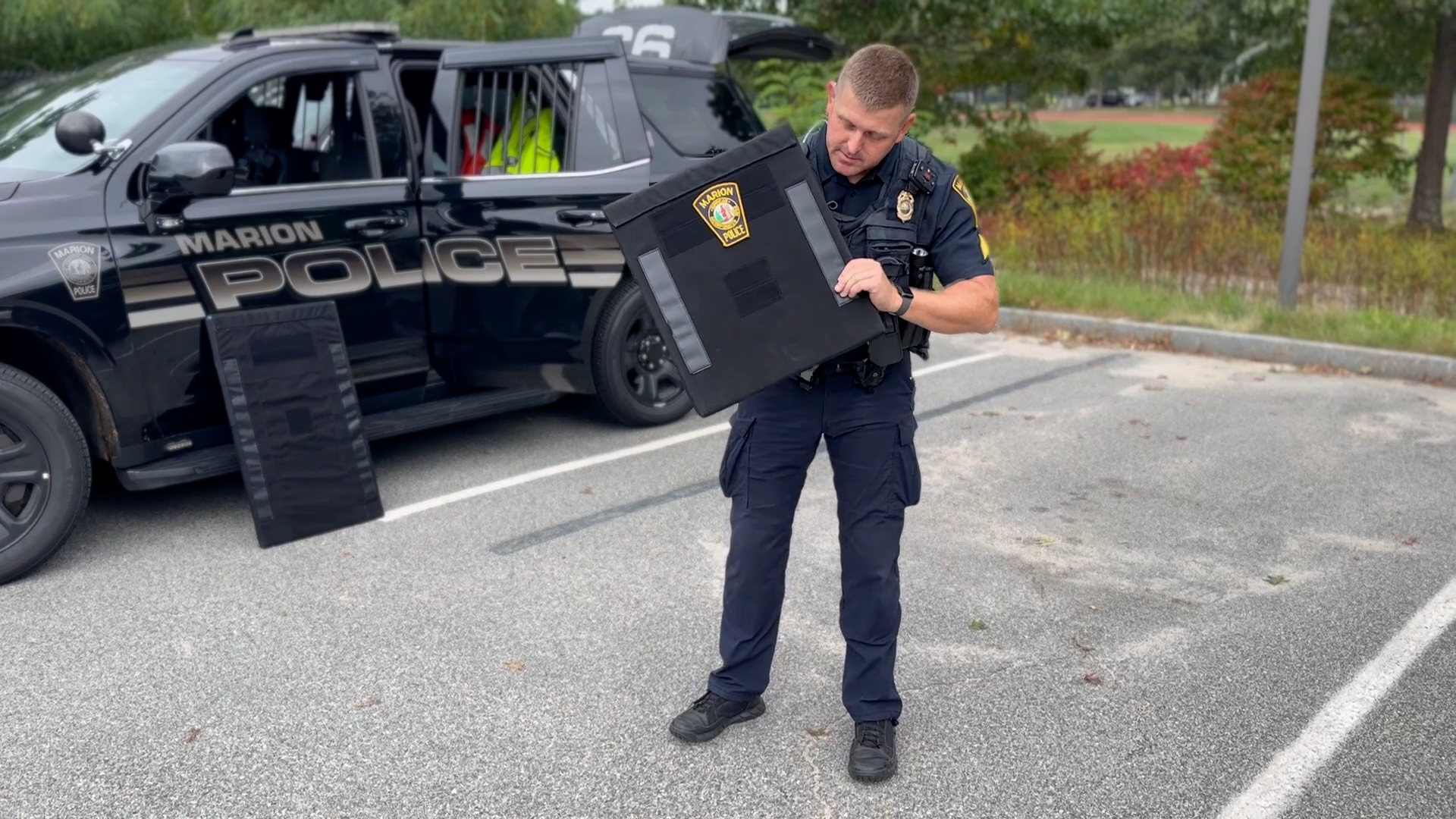
Ballistic Shield Daily Use vs Occasional Use: What Changes in Procurement

A shield that performs adequately for occasional deployment may create significant operational problems in daily use.

For Law Enforcement | SROs | Chiefs & Command Staff
TL;DR:
  • How often a shield is used changes what matters most in procurement. A shield that feels acceptable for occasional deployment may create real operational problems when used daily
  • Daily use amplifies every design limitation: weight, balance, handle ergonomics, mobility in confined spaces, and maintenance burden. They all become more significant with frequency
  • SROs and patrol officers who carry shields regularly need to evaluate them differently from tactical teams that deploy shields in specific, infrequent scenarios
  • The procurement question for daily-use environments is not just whether the shield can be used when needed. It is whether it can be used effectively, consistently, and without avoidable physical burden across repeated real-world use

1. Usage Pattern Changes the Evaluation

Ballistic shield procurement conversations tend to focus on ballistic performance, size, and weight. Those factors matter. But one of the most consequential questions often comes before them:

How often will this shield be used?

The answer changes the evaluation significantly. A shield optimised for infrequent, high-intensity deployment, tactical teams in specific scenarios, has a different design profile from one that needs to perform reliably across daily carry, repeated drills, vehicle transport, and regular operational use.

A shield that feels manageable in a 30-second demonstration may perform very differently after six months of daily use. Understanding which usage pattern applies is the starting point for a meaningful evaluation.

2. What Changes With Daily Use

Fatigue accumulates differently. For occasional use, the physical burden of a heavier or less ergonomic shield is limited by the infrequency of deployment. For daily users, that burden is present every shift. Weight, balance, and handle design affect how fatigue builds not just during an incident, but across an entire working day that includes carry, movement, training, and deployment.

Small design limitations become significant. A handle that is slightly awkward to grip, a balance point that requires constant adjustment, a carry weight that strains the shoulder, these are manageable in a short deployment. Repeated hundreds of times, they affect posture, endurance, and the consistency with which the shield is used.

Mobility limitations matter more. For occasional use in defined tactical scenarios, movement constraints can be planned around. For daily users operating in varied environments, school corridors, patrol vehicles, retail environments, public buildings, the shield needs to work in conditions that cannot always be anticipated. A design restricting movement in confined spaces becomes a daily operational friction.

Maintenance needs increase. A shield used occasionally spends most of its life stored. A shield used daily experiences repeated handling, transport, environmental exposure, and physical wear. Handles, mounting points, edges, and finishes all face more frequent stress. Inspection and maintenance requirements increase accordingly.

Adoption determines value. For a shield used occasionally, officers are typically deploying it in defined high-risk scenarios where the decision to use it is made for them by the situation. For a daily-use shield, the decision is made repeatedly, at lower levels of threat. If the shield is physically demanding or operationally inconvenient, officers may avoid using it in the scenarios where it would provide meaningful protection. A shield that is not carried is not providing protection.

3. The SRO and Patrol Officer Context

School resource officers and patrol officers represent the daily-use end of the spectrum. They may carry a ballistic shield during every shift, transport it in a patrol vehicle, deploy it in response to calls, and train with it regularly.

For this group, the procurement priorities shift:

Weight is a daily operational factor, not just a tactical one. A shield that weighs 40 lb carried in and out of vehicles, through buildings, and across distances before contact is ever made. The weight matters from the moment the officer picks it up, not just from the moment a threat appears.

Vehicle compatibility is a practical requirement. A shield that fits on the passenger seat of a cruiser is immediately accessible. A shield that requires dedicated storage or a secondary carry system introduces deployment delay and reduces the likelihood that the shield is available when needed.

Rapid deployment from a vehicle matters. An SRO responding to an active shooter call needs a shield that can be deployed quickly from a vehicle and carried into a building. The time and physical effort required to access and bring the shield into use are part of its operational effectiveness.

Coverage across varied environments. SROs operate in schools, corridors, cafeterias, stairwells, classrooms, gymnasiums. A shield that works well in open ground may not work well in confined interior spaces. Coverage, size, and mobility need to be evaluated in the environments where the shield will actually be used.

For more detail onĀ the weight argument for daily patrol deployment read this blog

4. The Tactical Team Context

Tactical and SWAT teams represent the lower-frequency, higher-intensity end of the deployment spectrum. Shields are typically used in specific, defined scenarios, high-risk entries, barricaded subject responses, active shooter contact, rather than as part of daily carry.

For this group, different factors are weighted:

Multi-hit performance under sustained fire. In a tactical engagement, a shield may absorb multiple rounds in rapid succession. ASTM E3347-25 cluster shot testing, three rounds within a 3.94-inch circle, tests this scenario specifically. NIJ testing spaces shots at least 2 inches apart and does not. Read more

Shield wall capability. In team operations, shields may need to connect or overlap to form a protective line during an advance. Quick-attach and quick-detach capability affects how effectively the team can deploy this configuration.

Edge and angled shot performance. In a dynamic tactical entry, the shield’s perimeter and the angle at which rounds arrive are both unpredictable. ASTM E3347-25 edge shot and angled cluster shot testing address these scenarios. Read more

Sustained hold under stress. A tactical officer may hold a shield in position for an extended period during a barricaded subject response. Weight and balance affect how long that position can be maintained effectively.

5. Evaluating for the Right Usage Pattern

For daily-use environments (SROs, patrol officers):

  • Evaluate weight as a daily carry burden, not just a deployment factor
  • Assess vehicle compatibility and deployment speed
  • Prioritise handle ergonomics and balance for repeated carry
  • Test in the environments where the shield will be used
  • Assess maintenance requirements under regular operational use
  • Consider how the design affects willingness to carry and use consistently

For occasional-use environments (tactical teams):

  • Prioritise multi-hit performance and sustained fire capability
  • Evaluate shield wall compatibility
  • Assess edge and angled shot performance under ASTM E3347-25
  • Test during realistic tactical drills, not just static handling
  • Evaluate how the shield integrates with team movement and communication

For a detailed look at how weight and fatigue interact, read Ballistic Shield Weight, Coverage and Fatigue: Understanding the Trade-Offs

For guidance on re-evaluating legacy equipment, read Ballistic Shield Re-Evaluation: Why Legacy Shields May No Longer Be Enough.

6. What Usage Frequency Does (and Doesn't) Tell You About Procurement

Understanding usage pattern does:

  • Identify which performance factors are most operationally significant for the specific deployment context
  • Reveal design limitations that only become apparent under sustained or repeated use
  • Help match the right shield format to the right operational role
  • Support more realistic field evaluation criteria

Understanding usage pattern cannot:

  • Substitute for ballistic testing data, daily-use and occasional-use shields both need to meet the required protection standard
  • Predict individual officer performance or adoption
  • Account for all variables in dynamic engagements
  • Replace training and familiarity as the foundation of effective shield use

GC Patrol Shield and GC Compact Shield: Designed for the Full Spectrum

GC Patrol Shield at 20 lb and GC Compact Shield at 10 lb address both ends of the usage spectrum.

GC Patrol Shield: NIJ Level III+ rated and ASTM E3347-25 verified at RF1 and SG levels provides rifle-rated protection at half the weight of conventional rifle-rated shields. Its weight makes it practical for daily carry by SROs and patrol officers, while its ASTM E3347-25 verified performance across edge shots, cluster impacts, fastener integrity, and angled shots makes it equally appropriate for tactical use.

GC Compact Shield: NIJ Level III+ rated and ASTM E3347-25 verified, the smallest shield to pass, is designed specifically for rapid deployment. At 10 lb, it fits on the passenger seat of a cruiser, deploys immediately, and provides rifle-rated protection in a format optimised for SROs who need rapid access from a vehicle.

Both use the same graphene composite construction. Both were tested as the same commercial products sold in the marketplace, with no modifications.

Learn more about GC Patrol Shield.

Key Takeaways

  • Usage frequency changes what matters most in procurement. A shield that performs adequately for occasional deployment may create significant operational problems in daily use.
  • Daily use amplifies design limitations: weight, balance, handle ergonomics, and mobility constraints. All become more significant across repeated use.
  • For SROs and patrol officers, weight is a daily carry burden, vehicle compatibility matters, and adoption rates affect whether the shield actually provides protection in practice.
  • For tactical teams, multi-hit performance, edge and angled shot capability, and shield wall integration are primary evaluation factors.
  • Evaluating a shield in the context of how it will be used, including extended carry, repeated drills, and real environment testing, reveals what short demonstrations cannot.

GC Patrol Shield is NIJ Level III+ rated and ASTM E3347-25 verified, the most complete testing record available for a ballistic shield. Speak to the GC team or download the brochure to find out more.