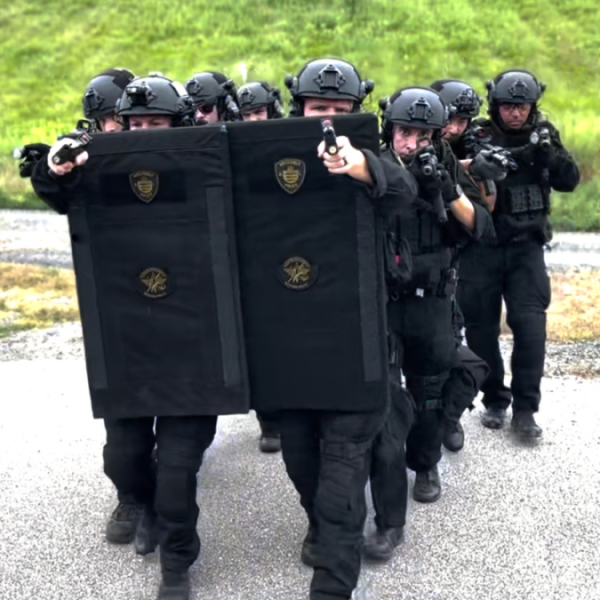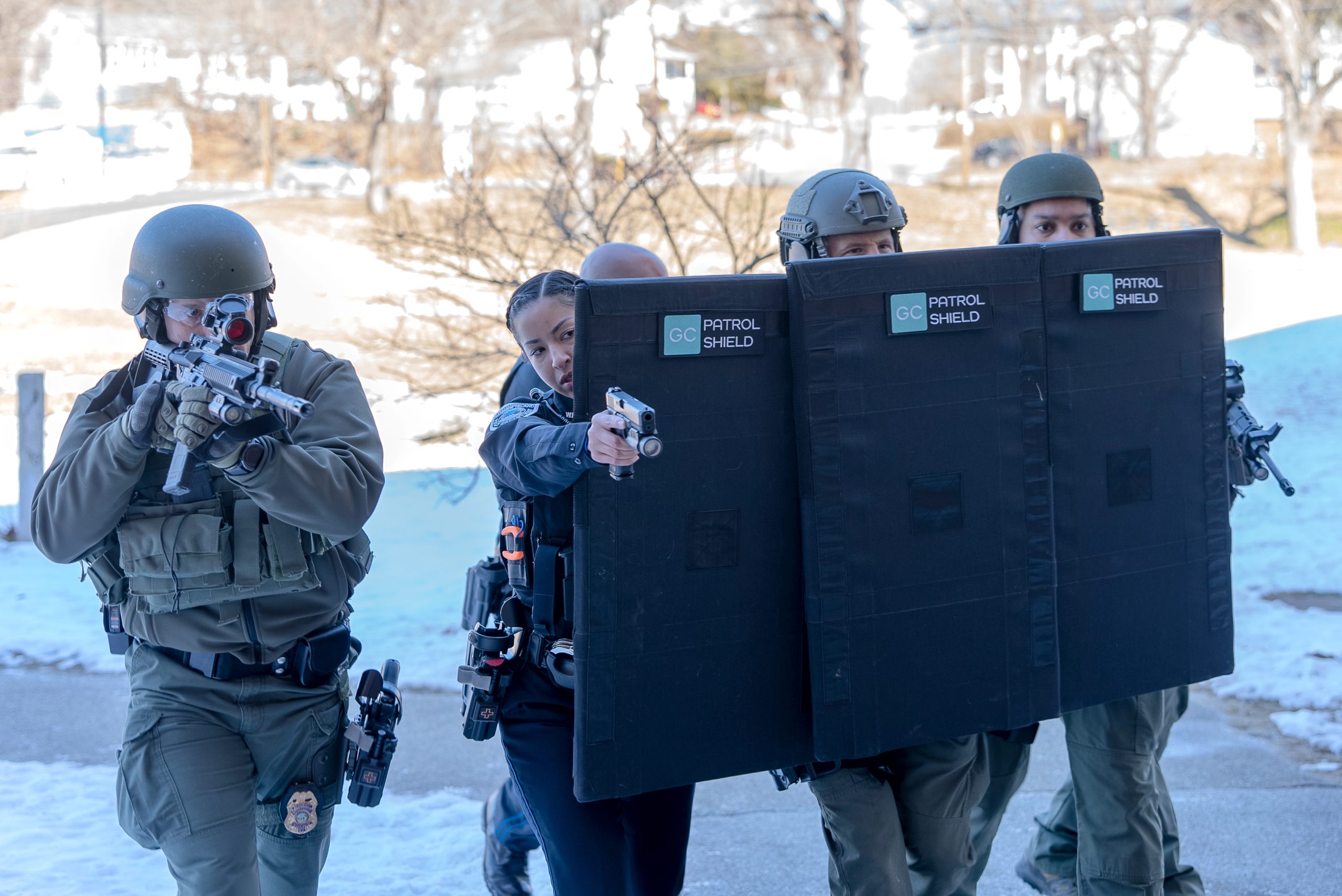
GC PATROL SHIELD VS TRADITIONAL BALLISTIC SHIELDS

Twice the shield. Half the weight.

NIJ Level III+ rated | ASTM E3347-25 verified |  10-year warranty
TL;DR:
  • GC Patrol Shield, the first rifle shield to pass ASTM E3347-25, the standard built for real-world ballistic performance
  • At 20 lb, it weighs half what conventional rifle-rated shields weigh, without sacrificing protection
  • Only shield verified to rifle and shotgun level under ASTM E3347-25
  • Weight, coverage, ergonomics and multi-hit resilience all affect how a shield performs in the field, not just the NIJ rating
  • A 10-year warranty, double the industry standard, reflects confidence in long-term durability

Protection standard:

NIJ tests ballistic resistance under lab conditions. ASTM E3347-25 tests shields under real deployment conditions: extreme temperatures, water immersion, perimeter shots, and multi-shot impacts.

Read more

Coverage:

Under NIJ testing, shots within two inches of a shield’s edge are classified as unfair hits and don’t disqualify the shield. ASTM E3347-25 mandates testing as near to that zone as possible. GC Patrol Shield passes.

Read more

Multi-hit resilience:

NIJ testing spaces shots across the shield face. ASTM E3347-25 requires three rounds within a 4-inch circle, testing what happens when fire concentrates in the same zone.

Read more

Weight:

Weight determines how quickly a shield can be deployed and how long it can be held in position before fatigue sets in. GC Patrol Shield weighs 20 lb, half the weight of conventional rifle-rated shields

Ergonomics:

Grip design, balance, and handling affect how a shield performs under pressure and over time. A well-balanced shield reduces strain and improves control during extended operations and dynamic movement

Durability:

Materials and construction quality determine how a shield holds up after repeated use and environmental exposure. GC Patrol Shield carries a 10-year warranty, double the industry standard

Long-term value:

Lifespan, replacement frequency, and operational performance all affect total cost of ownership. A shield that holds its performance over time costs less to operate than one that requires earlier replacement.

WHERE TRADITIONAL SHIELDS FALL SHORT

Most ballistic shields were designed around older testing standards and manufacturing constraints. That produces predictable trade-offs:

  • Weight: heavy shields increase fatigue, slow deployment, and reduce maneuverability over time
  • Perimeter coverage: many shields have never been tested near the edge, leaving that zone unverified
  • Multi-hit performance: NIJ testing does not require shots in close proximity; real engagements do not space impacts conveniently across the shield face
  • Environmental performance: shields stored in patrol vehicles cycle through significant temperature extremes; most have never been tested after that conditioning
  • Warranty: the industry standard is five years; a 10-year warranty indicates a different level of confidence in the product

GC PATROL SHIELD AT A GLANCE

Weight20 lbHalf the weight of conventional rifle-rated shields NIJ RatingLevel III+Rifle-rated protection ASTM E3347-25Verified First to passFirst rifle shield to pass
Shotgun VerificationASTM E3347-25 SG Only shieldOnly shield at this level ViewportNoneEliminates a common perimeter vulnerability Warranty10 yearsDouble the industry standard
Shield WallYesQuick attach/detach for team operations Storage ProfileFlat designFits easily in patrol vehicle trunk or front seat MaterialGraphene compositeEngineered for strength without weight
ASTM E3347-25 Verification
Perimeter Shot TestingPassedIndependently tested and SEI verified Multi-Shot TestingPassedThree rounds within a 4-inch circle Temperature ConditioningPassedExtreme heat, cold and water immersion before ballistic testing

WHAT MAKES GC PATROL SHIELD DIFFERENT

Traditional shields are built to pass a test. GC Patrol Shield was built to perform in the field, then tested to prove it.

ASTM E3347-25 conditions shields through extreme temperatures and water immersion before a single round is fired. It mandates testing less than an inch beyond the perimeter zone that NIJ classifies as unfair hits. It requires three rounds within a 4-inch circle, not five shots spaced across the panel. It tests the complete shield, including attachment hardware and structural components, not just the central strike face.

GC Patrol Shield is the first rifle shield to pass. It is also the only shield verified under ASTM E3347-25 at both rifle and shotgun level. The standard has been available for over six months. Few shields have passed at rifle level. None have matched GC Patrol Shield’s shotgun verification.

At 20 lb, it weighs half what conventional rifle-rated shields weigh. That combination of verified performance and reduced weight is what most traditional designs have not been able to deliver.

FAQs

  • What should I compare besides NIJ rating?

    NIJ rating confirms baseline ballistic protection under laboratory conditions. Buyers should also compare weight, perimeter coverage, multi-hit performance, environmental durability, and warranty. In the field, these factors determine how a shield performs, often as much as the rating itself. ASTM E3347-25 verification addresses several gaps that NIJ testing does not cover.

    For a structured procurement framework, read our Ballistic Shield Buying Guide

  • What is ASTM E3347-25 and why does it matter?

    ASTM E3347-25 is a ballistic shield standard developed specifically for law enforcement. It requires shields to be conditioned through extreme temperatures and water immersion before ballistic testing begins, and mandates testing as near to the shield’s edge perimeter as possible, multi-shot impacts in a concentrated zone, and structural weak points. GC Patrol Shield is the first rifle shield to pass verification under this standard.

  • Does lighter weight mean less protection?

    Advances in graphene composite materials make it possible to reduce weight while maintaining rifle-rated protection. GC Patrol Shield is NIJ Level III+ rated and ASTM E3347-25 verified at 20 lb. Weight alone does not determine protection level. The engineering does.

  • What is perimeter shot testing and why does it matter?

    Under NIJ testing, rounds striking within two inches of a shield’s edge are classified as “unfair hits.” A perforation there does not disqualify the shield. ASTM E3347-25 maintains the same two-inch tolerance but mandates testing less than an inch beyond that perimeter, as near to the unfair hit zone as possible. In real engagements, officers do not control where rounds land. Read more about what that testing involves.

  • How should I evaluate shield durability?

    Look at material quality, multi-hit performance, resistance to environmental exposure, and warranty length. GC Patrol Shield carries a 10-year warranty and was verified using the same commercial product sold to agencies since early 2024, with no modifications for testing.

See more

Ready to see GC Patrol Shield in action?

From SRO to SWAT, verified performance for every scenario